

RPS is a relationship between a supervisor and a supervisee who, together, explore work or ministry in a structured and intentional way.
What does RPS look like in practice?
So, you’ve decided to have RPS sessions. Brilliant. You’ve chosen your supervisor, and you’re ready to start.
Beginning our supervisory relationship
Our first session is a little different from those that follow. We spend most of our time getting to know one another and establishing our supervision covenant.
A covenant is much more than a formal agreement. It’s an opportunity to talk about your ministry, your sense of vocation, the context in which you work, and what you hope to gain from supervision.
Together, we explore how we might work best, what you can expect from me as your supervisor, and what will help you feel comfortable and supported. We also agree on confidentiality and its boundaries, our respective responsibilities, and the practical arrangements for future sessions.
By the end of this first meeting, we will have begun building the relationship of trust that lies at the heart of reflective pastoral supervision.
A welcoming space
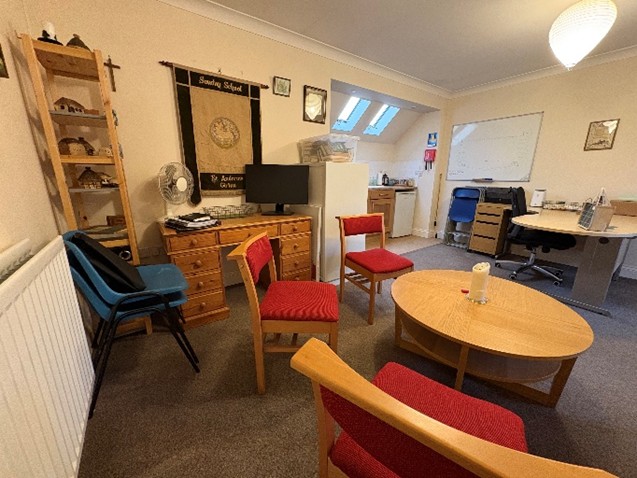
Supervision takes place in a comfortable, confidential setting, either face to face or online.
If we meet in person, this is the space where we’ll work together.
What happens during a session?
Every supervision session begins with an invitation to bring something from your ministry that you’d like to explore.
Sometimes you’ll know exactly what you want to discuss. At other times, you may have a feeling, a concern, or a question that you haven’t quite managed to put into words. That’s absolutely fine.
We’ll take time to discover together what matters most to you at that moment. Through attentive listening and thoughtful questions, we’ll begin to identify what you’d like to focus on.
Once we’ve found our focus, we can begin exploring it more deeply.
Exploring and imagining
Once we’ve identified what you’d like to explore, we can begin looking at it from different perspectives.
There are many ways of doing this. Sometimes a conversation is all we need. At other times, using images, objects, drawing, movement or even an empty chair can help us discover something that words alone might not reveal.
There’s no right or wrong way to explore. We’ll choose an approach that feels comfortable and helpful to you.
And sometimes, the process can be surprisingly playful, as well as profound.
Words and images
Sometimes words are enough. We can talk, write, draw, or create a map of an experience, connecting people, feelings and ideas in ways that help us see relationships and patterns more clearly.
You don’t need to be an artist or a writer. The purpose isn’t to produce something beautiful, but to discover something meaningful.
Objects and cards
Sometimes an ordinary object can help us express something we haven’t yet found the words for.
We might choose objects to represent people, relationships, responsibilities or feelings, and arrange them in ways that help us see a situation differently. Even the simplest objects can reveal unexpected connections.
We can also use cards, with photographs, symbols or abstract images, to explore experiences, emotions, hopes and possibilities.
These creative approaches can help us notice things we might otherwise overlook, opening up new perspectives and questions.

Chairs and movement
Sometimes changing our physical position can help us see a situation from a different perspective.
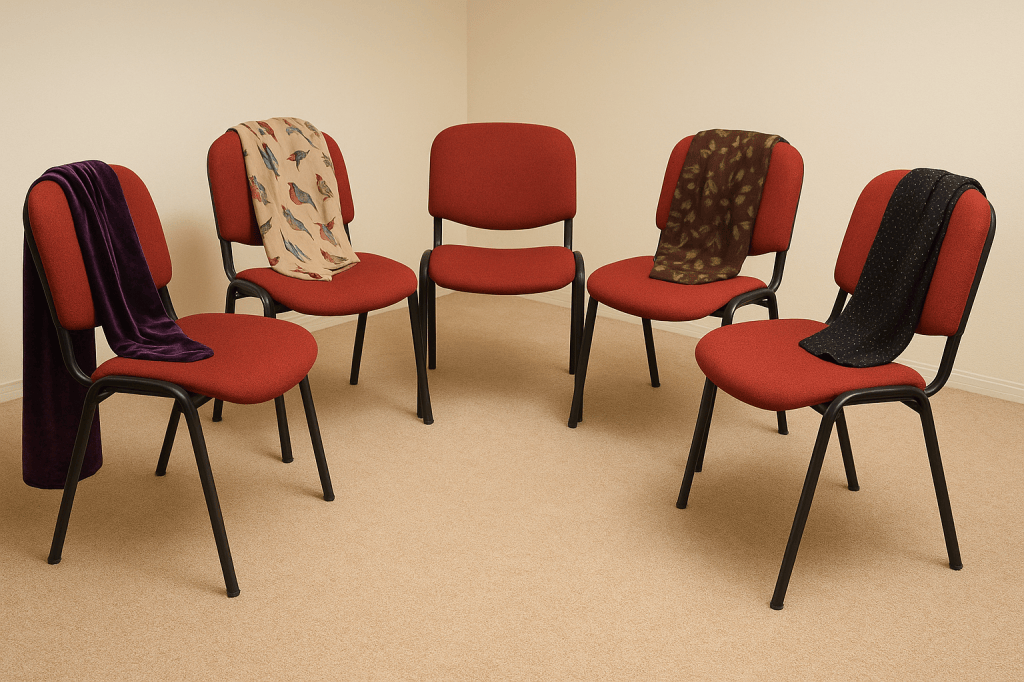
We might use chairs to represent different roles, responsibilities or relationships. Sitting in different places can help us explore how we experience those roles, what they ask of us, and how they affect one another.
We can also pay attention to what our bodies are telling us. What does it feel like to carry everything we’re carrying? Where do we experience tension, energy or a sense of freedom?
These approaches offer another way of reflecting on our experiences, particularly when words alone don’t seem quite enough.
Finding a way forward
Towards the end of our session, we’ll take some time to reflect on what has emerged.
What have you noticed? Has anything surprised you? Do you see your situation differently? Perhaps you’ve discovered a new possibility, recognised something important, or identified a step you’d like to take.
Sometimes you’ll leave with greater clarity or a sense of direction. At other times, you may leave with a question to ponder, or something you’d like to explore further.
Before we finish, we’ll review our time together and consider what you might want to take away from the session.
And sometimes, the most valuable insights come later, when you’ve had time to let your reflections settle.
Taking the next step
If you’re considering reflective pastoral supervision and would like to explore whether it might be right for you, I’d be delighted to hear from you.
We can arrange an initial conversation, with no obligation, to talk about your ministry, your hopes for supervision, and any questions you may have.

